Improved accessibility for blind people and those with visual disability at the new Parc de les Glòries
Collaboration with the ONCE has enabled the initial project to be adapted and measures applied that favour the personal autonomy of blind people, and accessibility for all citizens. The main improvements have been made at points where transport shares space with pedestrian areas.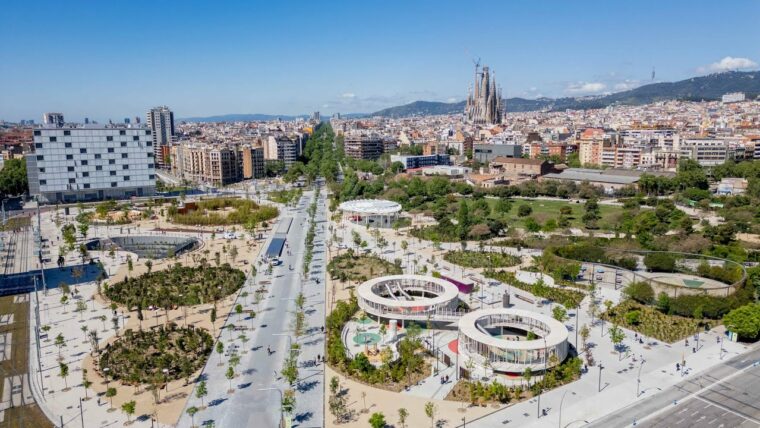
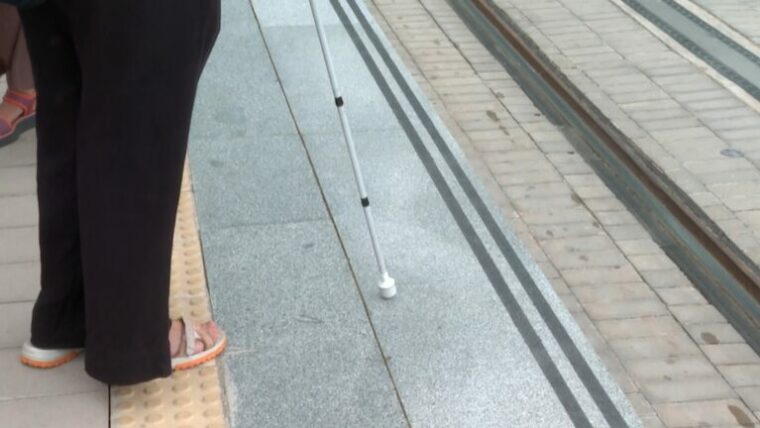
Notable changes introduced in the project include foot-sensitive paving with fluting (routing) and warning areas (tenji blocks) to enable blind people or those with visual disabilities to identify the direction and boundaries of hazardous areas. This tactile signage, along with urban furniture elements such as benches and litter bins has helped create a continuous boundary between the pavement and routes used by vehicles, offering a safer space.
Sound traffic lights have also been installed at all pedestrian crossings, with a colour contrast also introduced at tram lines, indicated with red paint. Two new routes have been introduced for people with visual disabilities, on top of those planned in the project to improve crossing points between street surfaces and public transport. Finally, at the junction between Rbla. Encants and Av. Meridiana, a pedestrian-only area has been defined using different paving.
Accessible and inclusive children’s play area
All recreational activities defined in the new children’s play area, with nearly 2,000 square metres of space, include accessible play elements. The design of the space combines dynamic play features, calm play spaces and areas for people to spend time in, catering for the diversity of children wishing to use this space.
The upper ring of this play area offers access for infants and others with reduced mobility, with a design that includes regulatory requisites. Tactile paving and different colours for the dynamic play areas facilitate the understanding of spaces and autonomous displacement.
The evolution of the project can be found on the website on the Glòries transformation process.