‘Art, architecture and memory at the service of death’ reveals Barcelona’s cemeteries to us as open-air museums
The cemetery in Poblenou offered the presentation of the book ‘Art, architecture and memory at the service of death’, analysing Barcelona’s funeral heritage from multiple disciplines. Edited by Ramon Dilla Martí and Maria Torras Freixa, the book includes research into art, architecture and collective memory at the city’s cemeteries.
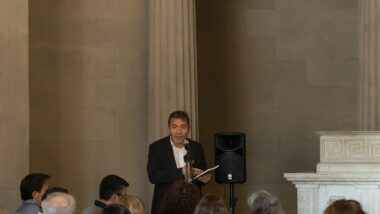
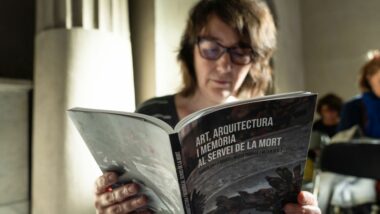
On Wednesday, 9 April, the neo-Gothic chapel at the Cementiri de Poblenou offered a presentation of the digital book Art, arquitectura i memòria al servei de la mort. Published by Barcelona City Council, Edicions UB and Cementiris de Barcelona, the book shows cemeteries as much more than places of mourning: these are open-air museums that explain the history of the city.
The voice of experts
Miquel Trepat, the director of Cementiris de Barcelona, opened the presentation with a powerful reflection: “Every vault, every headstone is a page in the book of Barcelona.” Trepat pointed in particular to the works of the Vallmitjana brothers, the relief of Rafael Atché and the sculptural sets of Joan Roig i Soler which have decorated this space since the middle of the 19th century.
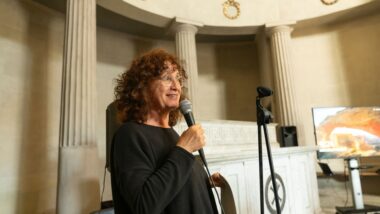
Neus Verger, in charge of the Rare Book and Manuscript CRAI Library at the UB, explained that the book synthesises three years of research: “We have catalogued over 200 heritage elements from Barcelona’s cemeteries”. The project includes a digital catalogue with detailed descriptions of each work.
Cemeteries as mirrors for society
Ramon Dilla, the coordinator of the work, read out a particularly emotive passage: “Our dead talk to us through the art and the architecture that surround us”. Dilla gave as an example the differences between the sobriety of communal graves and elaborate modernista vaults, truly reflecting the social inequalities of the time.
The book offers a chronological route from the first cemeteries outside the city walls through to contemporary spaces. A special chapter analyses how the pandemic has transformed funeral rituals, with previously unpublished data on the impact of Covid-19 on the management of Barcelona’s cemeteries.
Tour of corners with history
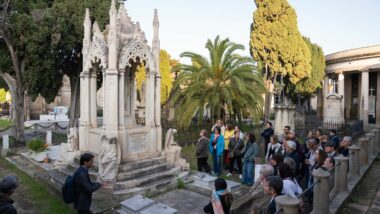
The ceremony culminated with a route around the most iconic spots on the site, such as the striking sculpture El petó de la mort by Jaume Barba, and the section with modernista vaults. Those attending discovered some curious features, such as the headstones of the victims of the yellow fever epidemic of 1821.
The publication, available for free in digital format here, includes over 150 images and previously unpublished maps. “It’s not a book about death”, concluded Dilla, “but about how the living have built places to remember”.