
Barcelona to get 29 new rainwater tanks
Administrative steps are being taken to reserve spaces for these infrastructures, which are needed to improve drainage in the city and avoid overflowing at the beaches in episodes of rain. The tanks are one of the measures in the Climate Plan to minimise the risk of flooding, protect assets and people and safeguard the city’s coastal and river ecosystem.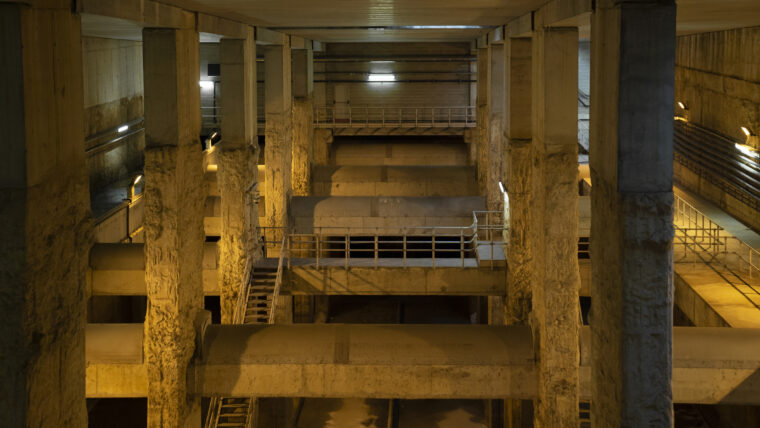 Rainwater regulation tank for the Horta riverbeds during the Open House event.
The plan that has been approved allows for the location of the city’s new rainwater tanks to be planned, in line with the Barcelona Master Plan for Comprehensive Sanitation (PDISBA) and complying with the goals established in the Climate Plan.
On one hand, the city is adapting to climate change, eliminating the risk of flooding from rainwater with a return period of ten years, and halving the risk of flooding from extraordinary rainfall with a return period of up to 500 years.
On the other hand, the measure helps to protect the environment, reducing the pollutant load at the beaches and coast due to overflowing of sewerage systems in episodes of rainfall.
Rainfall tanks planned under the Special Urban Plan:
- Av. Josep Vicenç Foix
- Calàbria
- Balmes Pg. Sant Gervasi
- Sant Genís d’Horta
- Can Dragó
- Torrent Estadella
- Carrer Foc
- Via Favència
- Marquès Campo Sagrado
- Escolapi Càncer
- Cos addicional Zona Universitària
- Navas
- Font Fargas
- Bogatell
- Guineueta
- Port Vell – Pg. Montjuic
- Vallcarca (project currently being drafted)
- Cementiri Montjuic
- Lledoner
- Amadeu Torner
- Mare de Déu del Port
- Passeig Olímpic
- Meridiana – Favència
- Plaça de la Creu Roja
- Meridiana – Flordeneu
- La Clota
- Passeig Sant Joan
- Torrent Tapioles
- Pitàgoras Cartella
Tanks through other urban plans:
- Prim, currently being executed
- Bac de Roda (anti-DSU), project currently being drafted
- Motors (anti-DSU), currently at the study stage
The current series of 15 rainwater tanks around the city have a combined retention capacity of 447,020 m3, helping the city’s sewerage network of more than 1,985 kilometres to function properly during periods of rain. All the tanks at the study stage, project or execution stage will increase the overall rainwater retention capacity by more than one million cubic metres.
