New shelters for wild bees in Barcelona’s parks and gardens
A hundred shelters are being installed for wild bees and wasps in 25 parks and gardens around the city, the goal being to favour reproduction and promote urban biodiversity. The conservation of species such as wild bees and other insects brings important environmental benefits, such as pollination, control of infestations and the improvement of air quality.
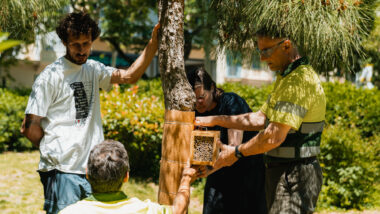
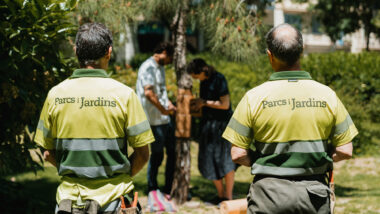
As part of World Bee Day (20 May), Granja San Francisco and Barcelona City Council have started to install a hundred nests for wild bees and wasps in 25 public parks and gardens in Barcelona.
The initiative aims to favour their reproduction and give a boost to the conservation of species such as wild bees and other insects that bring important environmental benefits such as pollination, the control of infestations and improvement of air quality.
Unfortunately, recent years have seen a significant decline in the population of pollinators, particularly wild bees, generating negative effects for their development as a species, with environmental consequences at the same time.
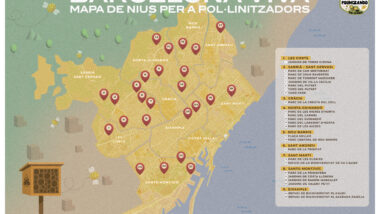
100 nests in 25 spaces
The hundred nests are being installed in the following spaces:
- Jardins de la Torre Girona
- Parc de Can Sentmenat
- Parc de Joan Raventós
- Parc de Torrent Maduixer
- Jardins de Vil·la Cecília
- Parc de la Tamarita
- Parc del Putxet
- Turó Park
- Parc de la Creueta del Coll
- Parc de les Rieres d’Horta
- Parc del Carmel
- Parc del Guinardó
- Parc del Laberint d’Horta
- Parc de les Aigües
- Plaça Sóller
- Parc Central de Nou Barris
- Parc de la Trinitat
- Parc de les Glòries
- Biodiversity shelter at Ca l’Alier
- Parc de la Primavera
- Jardins de Costa Llobera
- Jardins de Ramon Margalef
- Biodiversity shelter in Plaça Gaudí
- Biodiversity shelter at Plaça de la Sagrada Família
More wild bees, more flowers
These nests provide shelter for wild bees, favouring their continued nesting in green spaces in Barcelona. The presence of these pollinating insects should therefore increase, meaning more flowers and plants in the surroundings, improving the habitat of urban areas.
Solitary wasps will also be able to nest in the shelters. Despite their reputation, solitary wasps are not aggressive and play an important part in the ecological control of infestations and diseases affecting plants and cultivation.
This initiative responds to the goals of the Climate Plan in terms of protecting the city’s biodiversity. Parks and gardens are a shelter for life in the middle of the urban environment, which is why there are protection and conservation programmes for species and habitats to strive for the future of biodiversity in Barcelona. Full information can be found on the Climate Plan website.
Education workshops
Some education workshops will also be held over the coming months (linked to the care of wild bees, such as how to feed them and build nests for them), raising public awareness on the protection of wild bees and other pollinators.
The workshops will be held once a month, from 24 May to 21 February 2026, in different green spaces around the city.