
Restoration work gets under way on the Joan Miró mosaic
The mural designed by Joan Miró for Pla de l’Os forms part of the complete revamp of La Rambla, now in its final stages and expected to be completed in February 2027. The priority of the work is to preserve the original elements as far as possible.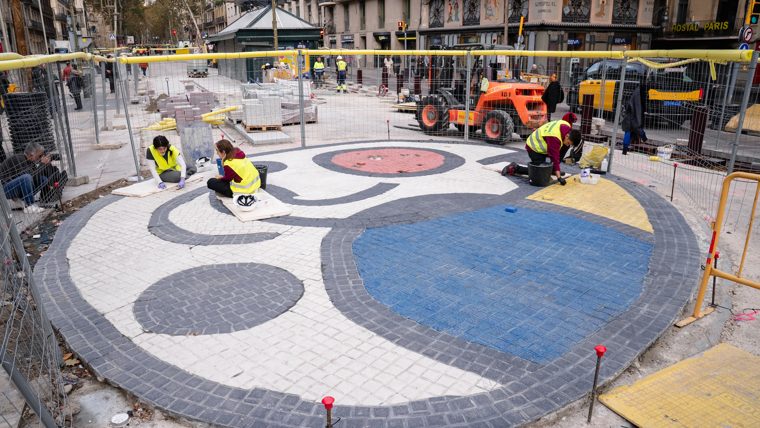 Tres persones treballen en la restauració del mural de Joan Miró de la Rambla.
Before the restoration work, which should be completed at the end of January 2027, an initial stage has been conducted to document, record and monitor the work, including high-resolution photography of the entire mosaic, plus a cartography of the fissures, loss of material, cracks, sunken parts, historical repairs and substitution of pieces. This work created a documentary reference base for monitoring the state of conservation of the paving to guide future actions.
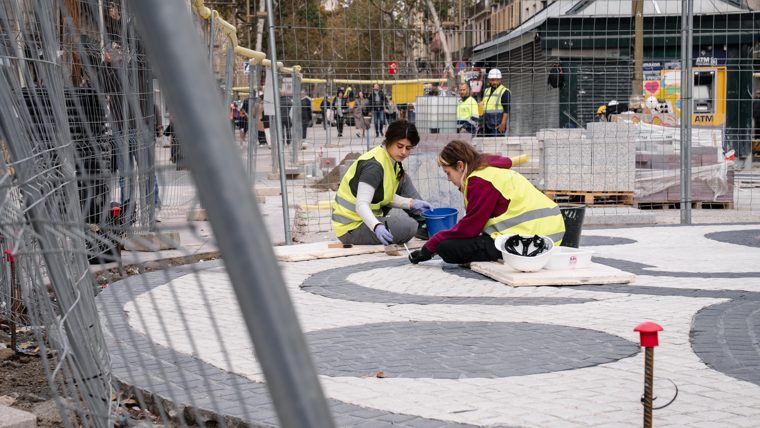
The conservation and restoration work aims to guarantee the stability, durability and correct reading of the mosaic, according to minimal intervention criteria and maximum respect for the original materials. Priority will be given to the existing panot paving stones and keeping them in their current positions as long as conditions allow. Only when the technical conditions for conservation mean pieces cannot be suitably preserved will they be replaced.
Fifty years of history
Joan Miró’s work was specifically conceived for La Rambla and the artist designed it with the collaboration of Llorens Artigas and Joan Gardy Artigas. With over 6,000 pieces produced by the Escofet workshop, it was inaugurated in 1976.
The mural is one of the artistic pieces with which Miró wanted to establish a direct relationship between his work, the city and its inhabitants. The artist wanted to create a piece integrated with public space, which could be stepped on by pedestrians and which formed part of Barcelona’s everyday life. The work represented the welcome for people arriving from the sea to enter the city. The sculpture Dona i ocell is devoted to people arriving by land and the mural at Terminal 2 of the airport is for people arriving by air.
As part of the revamp to La Rambla, Barcelona City Council will also be renovating other heritage elements in the avenue this autumn, such as the Font de Canaletes (1892), the Font de la Portaferrissa (1604-1680), the Font del Pla de la Boqueria (1830), the Font als Santpere (1995) and the domino mask set in paving by Joan Brossa (1991). The elements are mainly water springs, sculptures, paving and other artistic features that are listed and identified in Barcelona City Council’s Catalogue of Public Art.
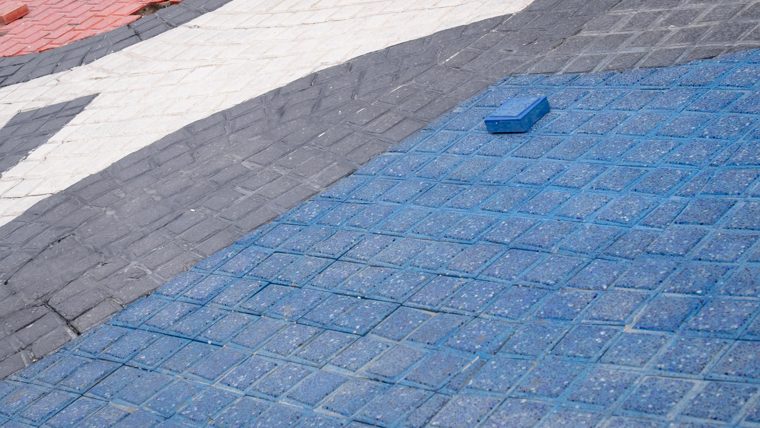
 Detall de les peces que formen el mural de Joan Miró del Pla de l'Os, a la Rambla.
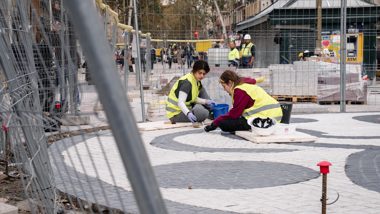 Dues persones treballen en la restauració del mural de Joan Miró del Pla de l'Os, a la Rambla.
Tags associated with the news item
Related news
-
 Comerç i mercats
-
 Urbanisme i infraestructures
-
 Transformacions urbanes
Support to condition establishments on La Rambla to current by-laws
01/09/2026 13:55 h
-
 Medi ambient i sostenibilitat
New canopy at Parc de les Tretze Roses starts producing energy
16/08/2026 10:32 h
-
 Urbanisme i infraestructures
Transformation of Montjuïc's exhibition grounds gets under way
28/07/2026 16:26 h
-
 Cultura i lleure
