
Ronda de Dalt: three lanes open again in each direction
This summer’s work relating to the project to cover the Ronda de Dalt between the IES Vall d’Hebron and Av. Vallcarca concluded on 29 August, after the road was closed between junctions 5 and 6 on the nights of 27 and 28 August to remove materials. The work was completed a week ahead of the scheduled date.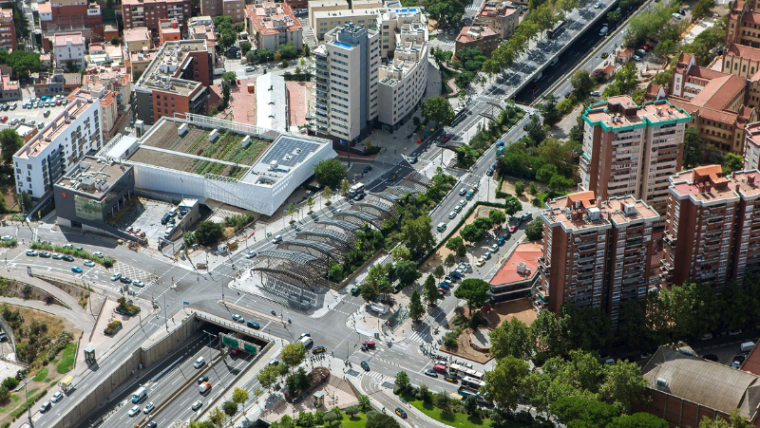
As from 29 August, users can now circulate with all three lanes of the road. The conclusion to the work, which began on 14 July, was brought forward from the initially scheduled date of 4 September. The work meant that one lane in each direction was closed between exits 5 and 6, enabling the wall structure and emergency exits to be built ahead of the work to cover the road. Specifically, this summer’s work has allowed service chambers to be built, along with new pavements and emergency exit gates.
This year’s work follows last summer’s construction of the central wall, one of the main pillars of the new cover, and the start of the construction of emergency exits in each direction which have been built in the last year. All the work for this stage of the project will be finished in spring 2026, leaving the rooftop and installations to follow in the final stage, followed by the urbanisation of the surface space.
The project to cover this section of the road, between Av. Vallcarca and the Institut Vall d’Hebron, provides continuity for the section already covered between the Mercat de la Vall d’Hebron and the school. The stretch of 340 metres includes the 200 metres already covered and generates a new surface area for greenery and public use, particularly benefitting local people in the neighbourhoods of Sant Genís dels Agudells and La Texionera.
The complete project (structure and installations) is due for completion in May 2027. The first stage of the structure entailed an investment of 12 million euros, on top of the cost of the cover, installations and finishings of the tunnel, which made up an investment of 20 million euros. Work will be carried out later to urbanise the new space created, with the process currently being updated to include the input from the participatory process.
