The UOC reorients its research with the future in mind
The Universitat Oberta de Catalunya celebrates thirty-one years of life adapting research to the challenges of society.
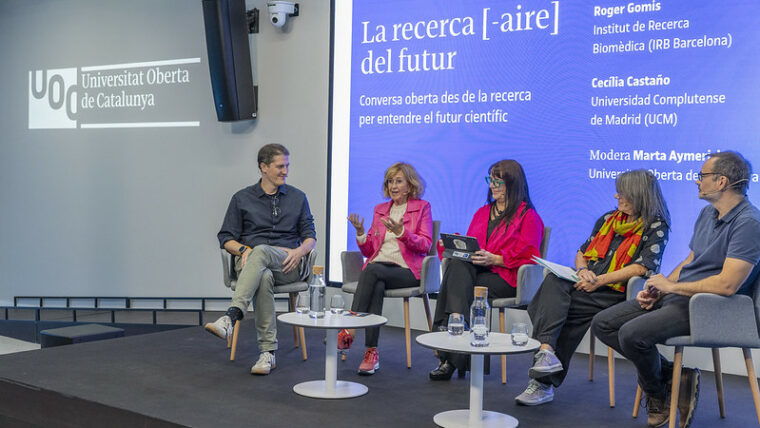
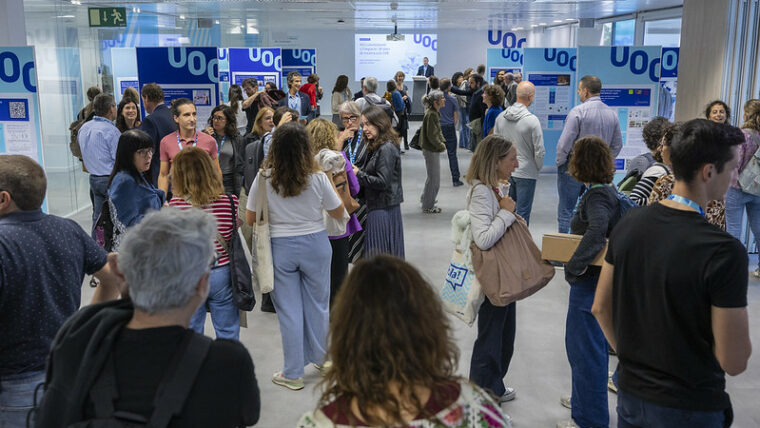
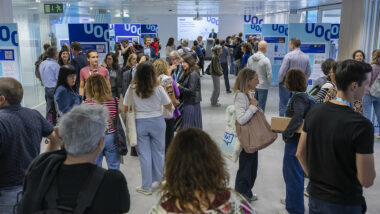
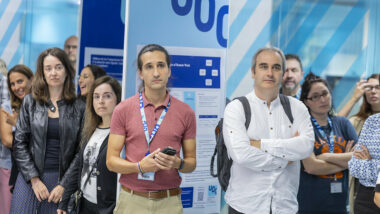
The Open University of Catalonia (UOC), founded in 1994, is restructuring its research into five pillars to move towards a more open science oriented towards the great challenges facing society. In a commemorative event, held at its headquarters on Rambla del Poblenou, the institution presented these new guidelines, which represent a commitment to open, interdisciplinary knowledge connected to society.
All of this within a path of growth in which the university has tripled its effort and research results in recent years. In three decades of history, its researchers have published around 7.000 scientific articles, and in terms of entrepreneurship, it has filed around thirty patents, has promoted six spin-off companies, and has supported more than 1.700 projects, through its Hubbik platform.
New classification
Following this objective of connecting its scientific activity with the challenges and new needs that arise, the UOC has restructured the 50 research groups it comprises into 5 major transversal axes that adapt and are linked to 5 of the 17 SDGs (Sustainable Development Goals) established by the United Nations in 2015: No poverty, Quality education, Gender equality, Decent work and economic growth and Reduced inequalities:
– Education of the future: which conceives a flexible and accessible model, to train and empower people throughout their lives and generate opportunities for change and vital improvement.
– Ethical and human technology: to make new inventions and advances available for an improvement in everyday life, incorporating an ethical perspective into the design and use of innovations.
– Digital transition and sustainability: with the aim of progressing towards a digital transformation that becomes the engine of a green, fair and inclusive transition, with the capacity to influence public policies.
– Culture for a critical society: to promote narratives that can contribute to forging a critical and plural citizenship and place diversity at the center of the engine of change.
– Digital health and planetary well-being: which is committed to the use of digital technologies to improve prevention, quality of life and equity in access to health.
Flexible and digital model
This restructuring and look to the future responds to the changes that are happening at an accelerated pace within our society. Without changing its essence, the Open University of Catalonia begins its fourth decade of existence leading the development of new learning models, and does so from a humanistic, scientific and technological perspective.
The ultimate goal is to train critical and empowered people, reduce inequalities and begin to build a much more equitable society. It is not just about transmitting knowledge, but to go further and create flexible and accessible educational spaces, which favor adaptation to the demands, requirements and new challenges that humanity faces in this 21st century.