
Smart traps introduced for control and monitoring of tiger mosquitos
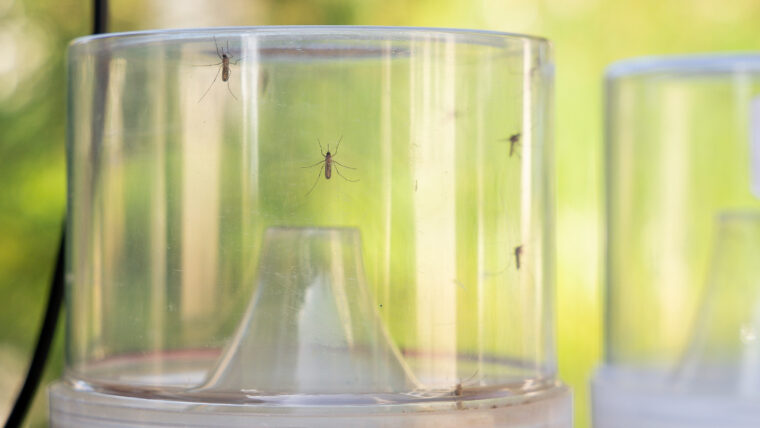
Every year the Barcelona Public Health Agency checks areas at risk to eliminate breeding points. Twenty traps with sensors are being introduced this year to identify the species and the sex of the mosquitos, allowing for the generation of data in real time.
Monitoring of public space where stagnant water can accumulate is stepped up from April to November. The map of areas at risk is developed taking into account the activity recorded the previous year, risk elements, facilities which are particularly sensitive in terms of the surveillance and control of arboviruses and other aspects linked to the environment and social inequalities, with 71 defined this year.
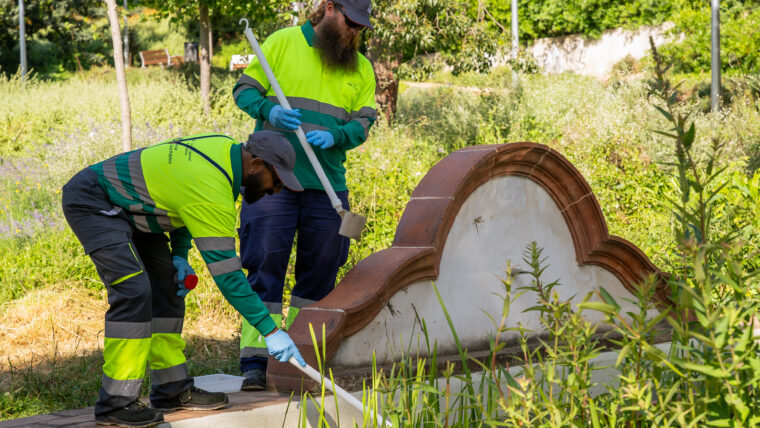
The most efficient way of controlling the proliferation of mosquitos and reducing their presence is to prevent them from reproducing, mainly achieved by eliminating their breeding places. The Barcelona Public Health Agency checked 43,106 surveillance and control points in 2024 (tree beds, decorative fountains and natural water points) in public space, detecting activity in 297 and carrying out 25,008 larvicide treatments with biological products, as set out in the annual report on monitoring and controlling mosquitos in Barcelona 2024.
Citizen collaboration
Some 70% of activity occurs outside on private properties, basically in small recipients, which is why the collaboration of the public is important. People are advised to check every 5 to 7 days that water has not accumulated, particularly beneath plant tubs, in drains, buckets, small recipients and toys.
This programme also handles reports from members of the public relating to the presence of mosquitos, as well as information, dissemination and public awareness and the monitoring of diseases passed on by mosquitos such as dengue, chikungunya and Zika,

Further information
 Municipal workers carrying out mosquito monitoring tasks. Author: Elena Pastor
 Municipal workers carrying out mosquito monitoring tasks. Author: Elena Pastor
 Smart mosquito trap. Author: Elena Pastor
