
Twenty years of supercomputing in Barcelona
- The Barcelona Supercomputing Center contributes to consolidating the city at the forefront of the European scientific ecosystem.
- The center promotes artificial intelligence and semiconductor projects that boost frontier research in Barcelona.
- Since its creation in 2005, the BSC has grown from 65 employees to more than 1.200.
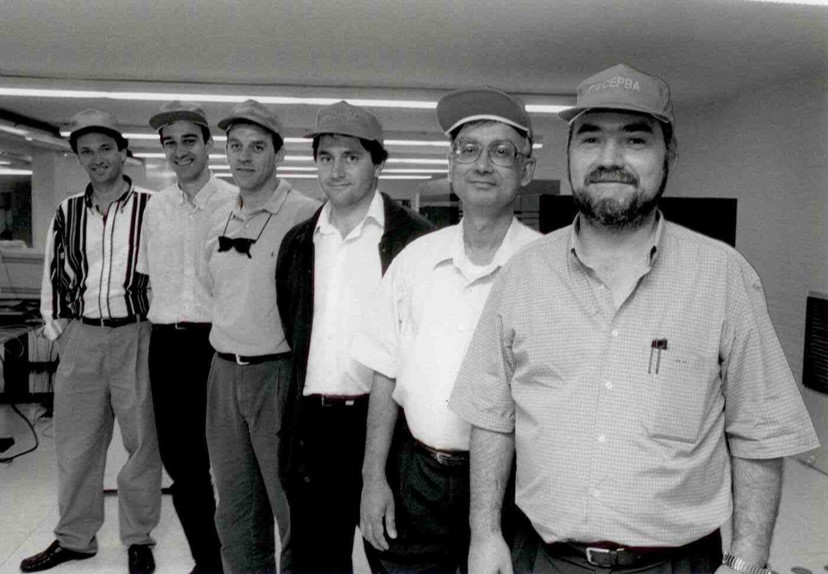
The Barcelona Supercomputing Center-Centro Nacional de Supercomputación (BSC-CNS) is celebrating its 20th anniversary. The main event for this commemoration was held on November 12, bringing together the city's various authorities. A date that highlighted the exponential evolution of this project, which has gone from having only 65 workers at the beginning to having 1.372, according to figures updated to October 31, 2025, the vast majority of whom are dedicated exclusively to research.
In its history, among other things, it has promoted new companies, attracted local talent and established itself as one of the most important research institutions in the state. Funded 65% by the Ministry of Science, Innovation and Universities, and 35% by the Generalitat of Catalonia, the BSC, directed by Mateo Valero, has managed to attract large-scale competitive funds and projects, and last year reached almost 100 million euros in annual operating budget.
For Valero, the current anniversary represents “recognition of the people, science and companies that have been involved throughout these twenty years and have turned the BSC into the most important research center in the entire state”. He also highlights that “a mutually beneficial relationship has been established with Barcelona. The city has provided its unbeatable environment, and the center has returned this investment and welcome with a lot of money and has made the scientific ecosystem grow considerably”.

BSC's contribution to knowledge and Barcelona
The BSC is, first and foremost, a research center. It is made up of a total of 72 research groups, divided into five broad areas: life sciences, earth sciences, computational sciences, applied engineering and computational social sciences. In 2024, 30 doctoral theses were presented, 363 articles were published in specialized journals, and 35 projects funded under Horizon Europe funds were initiated. All this production provides new knowledge, encourages funding, and multiplies research around it.
During 2024, the BSC published 30 doctoral theses, 363 articles in specialized journals, and initiated 35 funded projects.
Since 2017, the BSC and Barcelona City Council have been working together to expand knowledge and progress in research. Specifically, the “Science, Technology and Society” project received a municipal contribution of 350.000 euros in 2024, and this 2025 initiative has continued to be the result of Barcelona's commitment to technological development as a driver of both economic and social progress, within the framework of the Strategic Plan for Science and Innovation 2024-2027.
This program, which places special emphasis on artificial intelligence and promoting equality, beyond research, brings enormous benefits to the city as a whole. It contributes, first of all, to giving citizens access to and also more knowledge about this technology. On the other hand, it intensifies its support for companies and startups, collaborates with the scientific world, fights to increase the influence of women in STEM (Science, Technology, Engineering, and Mathematics) careers and also to revitalize existing technological hubs in the city. Its alignment with municipal strategies such as the Barcelona Green Deal Agenda the promotion of local R&D&I or the AI Strategy should allow the generation of multiple opportunities and collaborations for the future. All of this to contribute to putting AI, and supercomputing, alongside social and economic progress.
The center, located in the district of Les Corts, inside the Torre Girona, also collaborates with very diverse companies (ranging from pharmaceuticals, to water companies, to automobile companies), to make all its technology available to them. On the other hand, it promotes new spin-offs (business initiatives), of which there have been 14 in total since 2016 to date, and which create jobs, applications and viable scientific companies.
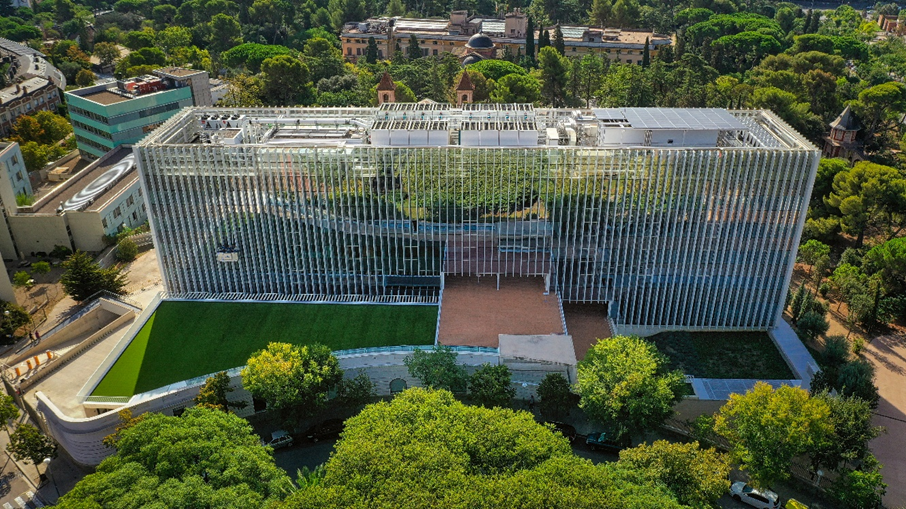
As if all this were not enough, the BSC serves as a base for other scientific centers. An external expert evaluation committee evaluates the various projects that are presented in a competitive competition, in order to be able to use supercomputing technology remotely and apply it to their research. The Barcelona center provides, in this sense, a reference research nucleus that offers feedback to the entire ecosystem, not only of Catalonia, but of the whole of Spain, via the network of other smaller supercomputing facilities spread throughout the state, what is known as the Spanish Supercomputing Network, RES. This node, described as a Singular Scientific and Technical Infrastructure (ICTS), distributes high-performance computing resources to research personnel from all over Europe.
Evolution of MareNostrum
In honor of the entire area around Barcelona and the Mediterranean Sea, MareNostrum has been the name given to the supercomputers that have been part of and are the core of the BSC since its inception. The first, MareNostrum 1, was a great revolution, and led to the activation of this new research center in 2005. Proposed and promoted by its current director, Mateo Valero, it had its precedents in the European Center for Parallelism in Barcelona, CEPBA, created in 1985 with the support of the Ministry of Industry.
The performance of the current MareNostrum 5 is eighteen times higher than the previous one and 10.000 more than compared to the first, MareNostrum 1.
Since then, the technology has been renewed five times, until it reaches MareNostrum 5, the current version, inaugurated in December 2023. This latest adaptation, which is located in a space at the heart of the research center, has a performance 18 times higher than the previous one, MareNostrum 4, and a processing capacity of 314.000 trillion operations per second (314.000.000.000.0000.000), close to what is called exascale performance, which is calculated when it reaches a trillion. To better understand these enormous figures, and the exponential progress that this work of engineering is experiencing, it is estimated that the current MareNostrum 5 is 10.000 times more powerful than the first, and that a single processor (those parts that transmit the electrical impulse) has the same capacity as the entire MareNostrum 1.
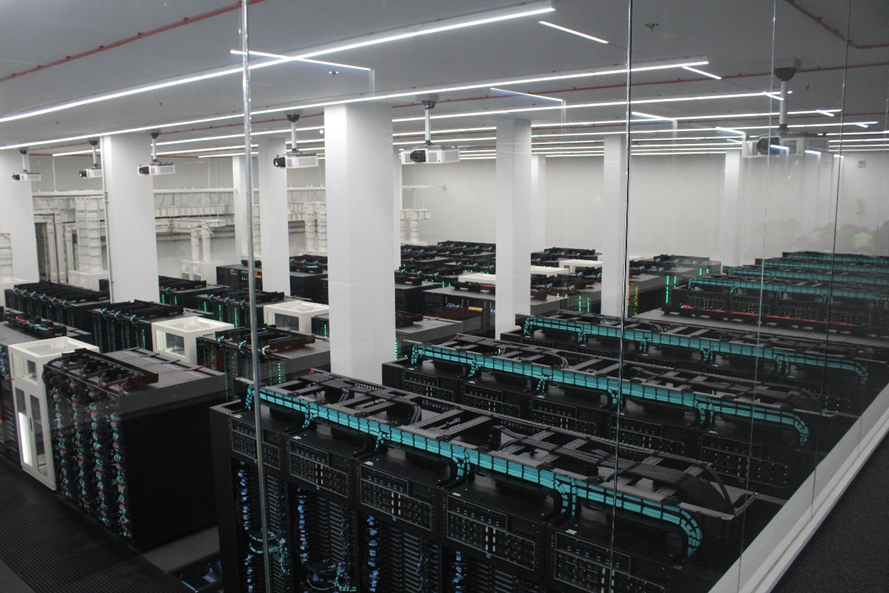
There are currently five large supercomputers on the continent. In addition to the one in Barcelona, and in order of magnitude, in Germany there is the most efficient of all, the Jupiter, followed by the LUMI in Finland, the Leonardo in Bologna and then the Meluxina in Luxembourg. In a rotating manner, all of these and those to come update, as they become obsolete, their technology, which is mainly based on transistors that are increasingly smaller and tiny chips that increase in number and provide much greater speed.
A supercomputer must combine two characteristics: large storage, and enormous speed. Two necessary ingredients that allow fast and complex calculations, which a regular PC would take months, or perhaps years, to perform. To undertake these processes, two main concepts are used: that of the “grids” which are all the variables that are introduced, in different layers, to predict, for example, the weather that a specific day in a specific place may have; and that of "digital twins" which consists, to simplify it enormously, of copying the characteristics of a material or tissue of the organism (to cite two real cases) to study it virtually.
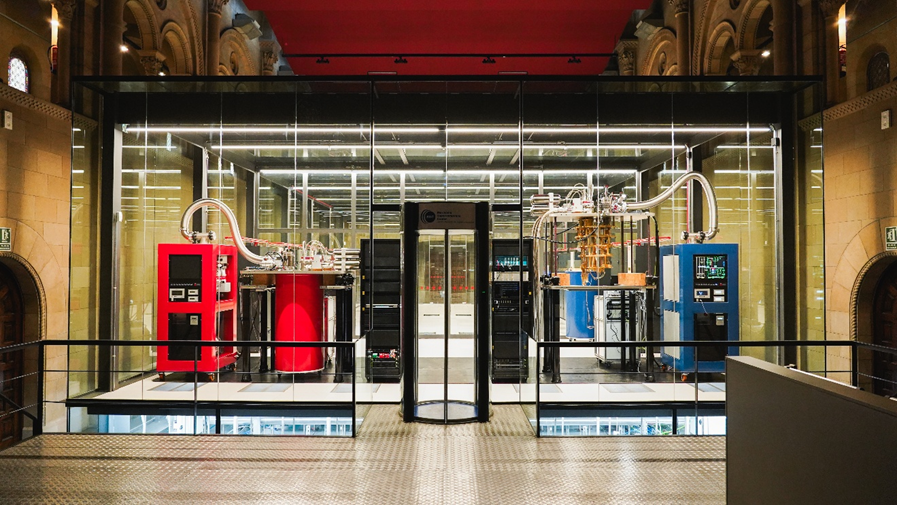
This technology, which is progressing at an incredible pace (much smaller chips with very different materials such as graphene are already being tested), has now sought to be improved through quantum physics. The BSC, in this sense, launched its first quantum computer in February, and has installed it in the space occupied by all the supercomputers before MareNostrum 5, which is the old chapel. This infrastructure has been financed by Quantum Spain. The aim is to increase speed and efficiency. The classical supercomputer works through chips, which include many transistors and can only be placed in a pair of positions (0 or 1), which is the binary system. But a quantum one, which works with Qbits, has an “other gear”, which is superposition and is faster and allows for exponential evolution.
The Barcelona Supercomputing Center has been very present at events such as the City and Science Biennial organized by the Barcelona City Council, or on a planetary scale, with the commemoration in 2025 of the International Year of Quantum Science and Technology. In these two events, Alba Cervera, a doctor in quantum information from the University of Barcelona and a senior researcher in the quantum group of the BSC, where she works especially on algorithms, machine learning and the concept of HPC (High Performance Computing), has actively participated, representing the BSC. Specifically, at the Biennial, Cervera was one of the three curators, and was also in charge of presenting or moderating two conferences and a round table on the subject: “Cybersecurity and quantum”, “What is quantum physics?” and “Geopolitics in the second quantum revolution”.
"We must democratize science, and bring it closer not only to large companies, but also to medium and small companies and advance all research that is at the service of citizens". Mateo Valero, director of the BSC.
Present and future, new areas of work
Currently, the Barcelona Supercomputing Center has launched two new projects that foresee an impact that should position Barcelona as a European reference center in science and innovation. The first of these is DARE, a new public-private initiative for the design and prototyping of new open source chips. These tiny pieces are the basis for supercomputing to work and there is an increasing effort to make them smaller, in order to fit more of them inside the machines and increase their performance. They are the essence of all computers but also of devices such as mobile phones or new electric vehicles. They are made of materials that must be semiconductors, such as silicon, with properties to conduct or stop electric current. However, making them is not an easy task and requires a huge infrastructure and also financing. The world's factories are currently located in the United States and Taiwan, which means that the European Union is not self-sufficient. That is why Europe is investing in new design projects and in Barcelona, and Catalonia in general, the world of semiconductors is a sector that has great growth potential.
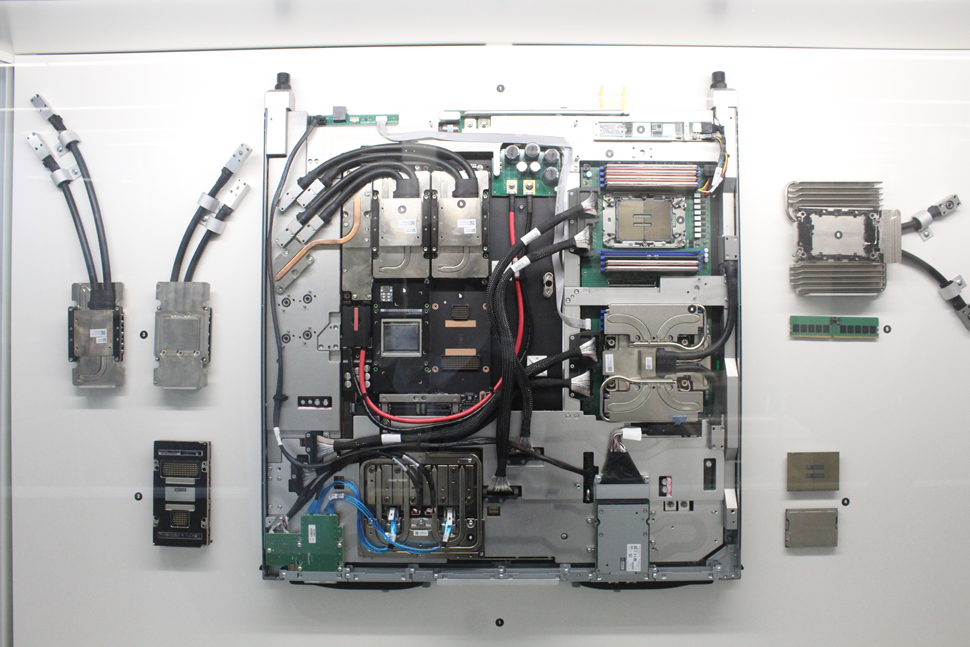
The other major initiative is the AI Factory. In short, it involves progressing in the field of artificial intelligence and making it available to companies so that they can increase their competitiveness. All this infrastructure is physically integrated within MareNostrum 5, in a differentiated sector, and opens up great potential for the various companies, but also for research.
“We should never forget that the BSC is a research center. If we stop researching, if we become a mere service center, we will not be able to survive. We must keep this DNA intact." Mateo Valero, director of the BSC.
For the future, the most important objectives are to strengthen AI and offer it to companies, promote semiconductor design, and make progress especially in the science that is done at the center. “We should never forget that the BSC is a research center. If we stop researching, if we become a mere service center, we will not be able to survive. We must keep this DNA intact”, says Mateo Valero. For the director and promoter of the BSC, what must be prioritized is above all the social return: “we must democratize science, and bring it closer not only to large companies, but also to medium and small companies and advance in that research that is at the service of citizens, such as climate science, or personalized medicine”.