Reduction of the external factors associated with the Litoral ring road
Air quality and noise are two of the most important environmental problems in Barcelona, as they are in many other large cities, and have a direct impact on people’s health. In both cases, current levels are higher than the reference values for guaranteeing health, and road traffic is a major contributor to this.
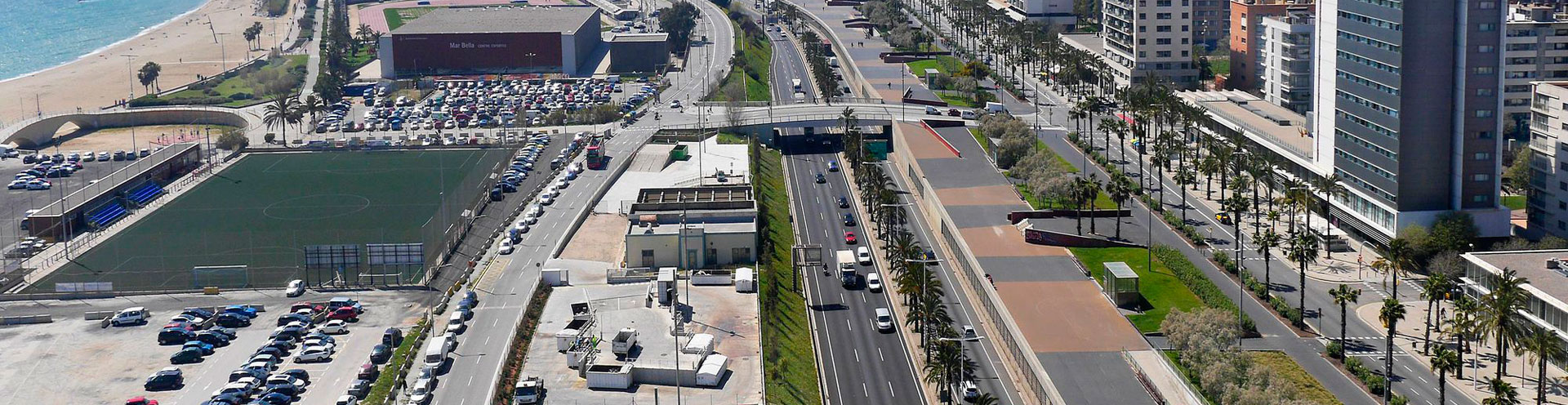
The ring roads are a significant source of pollution and daytime and night-time noise for the local population and users. Their impact on the population differs along the entire length of the road, depending on the proximity of the houses, the location of the ring road in each section, traffic speed and the height of the buildings.
What are we doing?
-
In 2023, the Air Quality Assessment Report drawn up annually by the Barcelona Public Health Agency (ASPB) presented its best results since records began, reaching the levels set by the EU for the first time.
-
In 2024, the data reflected this steady decrease, once again hitting record lows and falling within current EU regulations. However, despite these improvements, pollution continues to impact the health of city residents, making better air quality a priority goal.
As such, Barcelona has developed a series of new measures to fight pollution and continue reducing the levels recorded at monitoring stations with an eye to 2030, when the EU regulations will be updated and the annual limit values will be halved from 40 µg/m³ to 20 µg/m³.
In fact, the Climate Plan includes specific initiatives with a €1.8 billion investment to reach climate neutrality by 2030. Current and future measures to improve air quality in the city include:
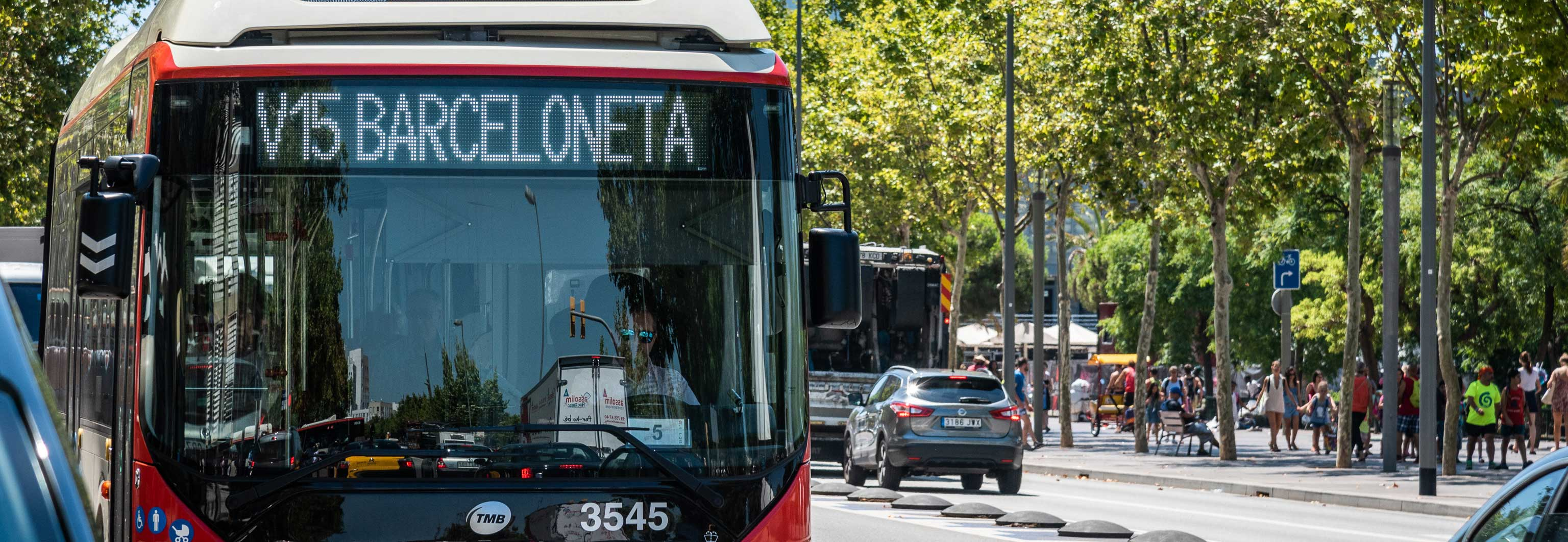
- Improving municipal fleet engines, especially in TMB buses, with the goal of reaching 75% zero-emission buses by 2030 and 100% by 2036.
- Completing the city’s public transport network, with the tram connection along Avinguda Diagonal, the L8 expansion, the L9/L10 connection, the improvement of the city and intercity bus service, and the improvement of the Rodalies commuter trains.
- Continuing work on the Low Emission Zone (LEZ) in accordance with the Government of Catalonia’s Air Quality Plan. The implementation of the LEZ has resulted in a cleaner vehicle fleet, with B-rated vehicles accounting for less than 15% (14.48%), ECO vehicles exceeding 20% (21.43%) and zero-emission vehicles reaching nearly 5% (4.94%) of all vehicles on the road.
- Developing more policies to promote pedestrian accessibility and bicycle and scooter mobility.
- Creating more urban green spaces, given their environmental benefits, with the goal of gaining 40 hectares of green space during this term of office to promote the health and well-being of city residents.
-
In the second half of the year, the Barcelona Public Health Agency’s (ASPB) full air quality assessment report for 2024 will be published.
Useful documentation
Share in social networks
Portes del Mar
Related projects
Actions to improve the environmental quality of the coastline
Share in social networks
Portes del Mar