Restauració


NULL

Saint Eulàlia’s flag

Saint Eulàlia’s flag is one of Barcelona’s most important symbols.

NULL

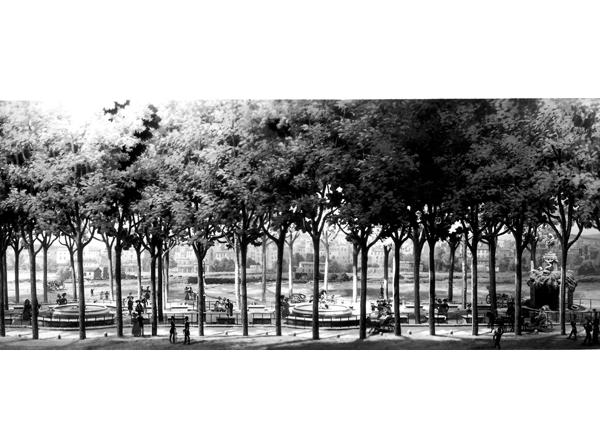
Diorama of Passeig de l’Esplanada

Dioramas, models designed to be observed from a fixed point of view, performed the functions of today's digital 3D representations.

NULL

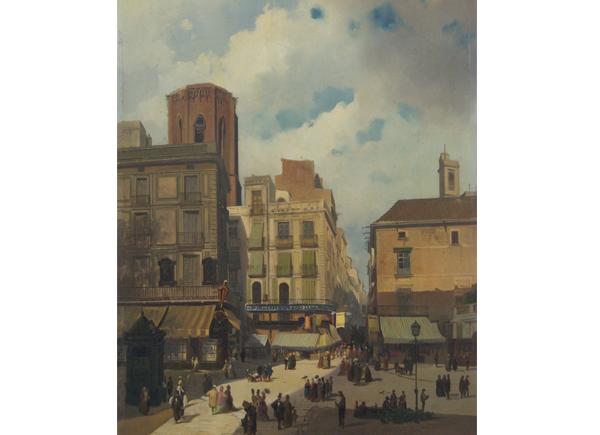
El Pla de la Boqueria

The artist Achille Battistuzzi painted several vedutte of Barcelona, works that depict life in the Catalan capital in the nineteenth century very accurately. The restoration of this work from the MUHBA Collection enabled us to learn more about the grid used to position the elements in the scene.
NULL

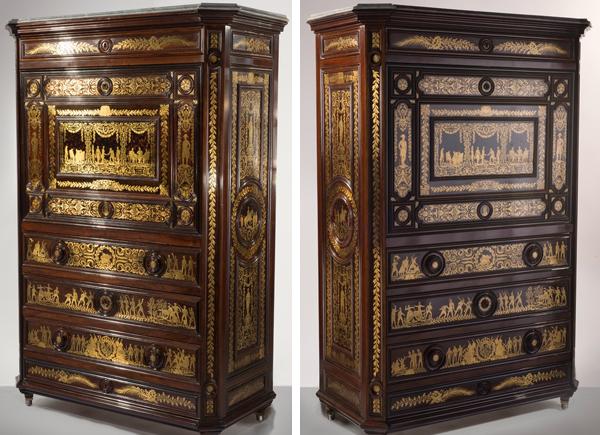
Bureau

In restoring this unique piece of furniture, the secret system for accessing the inner drawers was restored. The key to this mechanism lies in certain catches, with a curved side that locks the drawers and a wedge-shaped side that releases them.

NULL

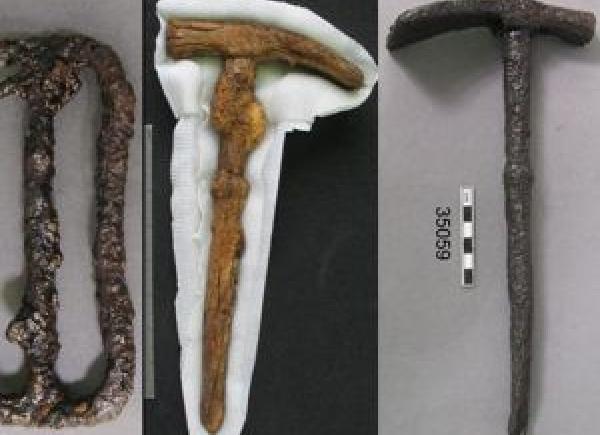
Archaeological iron objects

Treatment of iron objects from the Born market site by means of hot alkaline sulphite baths to accelerate the process.

NULL

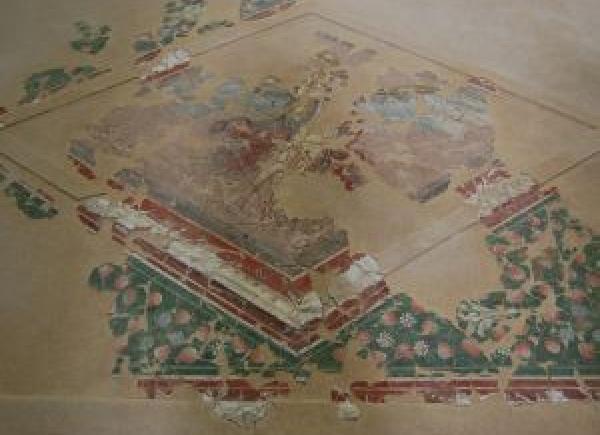
Roman mural paintings from the domus of carrer Avinyó

Luxurious decoration on the roof of the room or cubiculum of the owner of the Roman house on Carrer Avinyó. In the centre, there is a rhombus with the presentation of the Rape of Ganymede (“the most beautiful of mortals”, according to Homer in The Iliad) surrounded by floral motifs and moulded borders.

NULL

Restoration of a neolithic bovid skull.

This object, which was found at the Barcelona Liceu Conservatory site in 2006, was restored for the exhibition organised by the MUHBA, entitled: “FIRST FARMERS/BCN. The major innovation 7,500 years ago”.

NULL

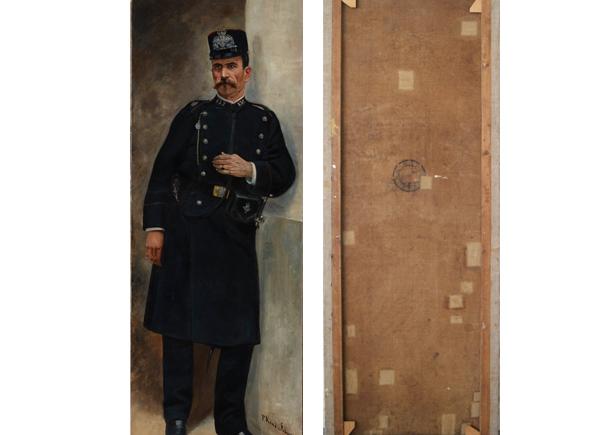
Portrait of a municipal guard

L’obra pintada a finals del segle XIX, és una de les poques obres conegudes i conservada en una col·lecció pública del pintor Pedro Vidal de Solares y Cárdenas qui es va relacionar amb els impressionistes francesos i molt en particular amb Renoir.

NULL

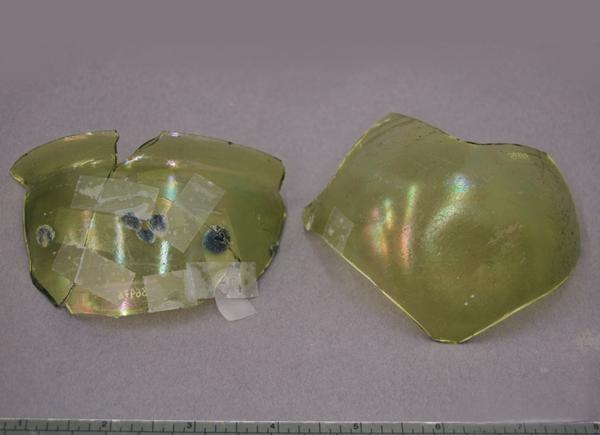
Fourth-century glass vase

Restoration:

NULL

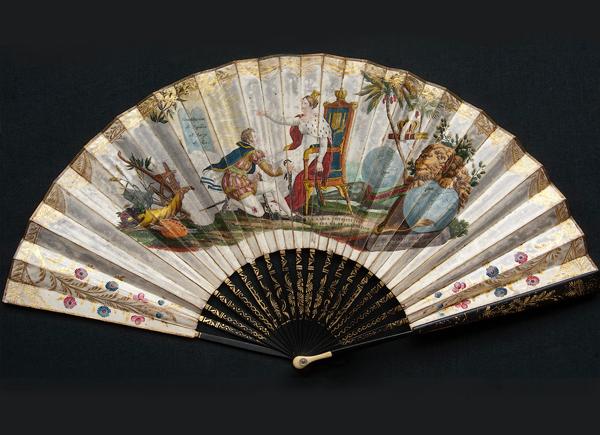
Fan of the constitution

Fans were used as a subtle form of political propaganda. Fans were made in support of the different Spanish constitutions in what could be considered a precursor of merchandising. In this case, the many repairs made indicate that this fan was used frequently and that great care was taken of it.