

The freedom to be
On 28 June, we celebrate International LGBTI Pride Day, a date to steadfastly advocate for and advance the defence of the rights of individuals within the LGBTI communities. This date is an opportunity to continue raising awareness across all levels and sectors and to fight to eradicate hate speech and discrimination due to LGBTI-phobia, which are unfortunately both still present in our society.
In addition, 28 June is a day to celebrate the progress made and highlight that sexual and gender differences and family diversities are an unquestionable right and part of our city’s wealth.
Barcelona continues to demonstrate to the world that it is a proudly diverse city, where all possible ways of being and being loved come together.
This year, an extensive programme of activities has been organised in collaboration with the Barcelona LGBTI Centre, managed by the Platform of LGBTI Entities of Catalonia. In the coming months, Pride will be celebrated across the city's various districts, inviting city residents to enjoy a broad range of assertive, artistic and cultural events that showcase the community’s diverse perspectives.
A jointly designed programme that includes the participation of leading figures in their fields of expertise. Come and meet them!
Participants

Shimar Guyo
HR professional
Born in the Philippines, Shimar Guyo has lived in Barcelona for 16 years, in the neighbourhoods of Dreta de l’Eixample and Sagrada Familia. She works as an HR professional in the city, where she embraced her identity as a transgender woman and underwent her gender transition. A staunch advocate for a world free of prejudice and stereotypes, her vision of society is one where trans individuals can achieve full self-determination and equality. For Shimar, Barcelona transcends geography, symbolising liberation, pride, and the freedom to live authentically as her true self.
Katy Pallàs
Teacher
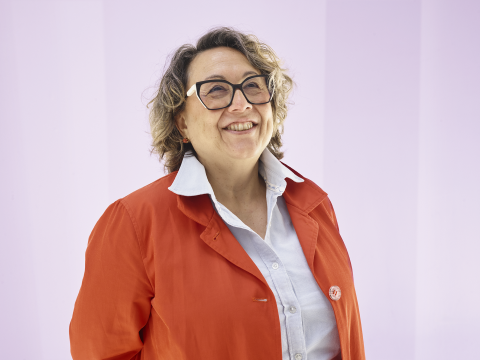
Katy Pallàs is a secondary school teacher and activist for the rights of LGTBI families and people. She lives in the Sants neighbourhood with her wife, whom she has been with for the past 21 years, and they have a son together. Born in the town of Manuel, in Valencia, she has been living in Barcelona for more than fifteen years, where she has pursued her career and her social commitment to LGTBI rights.

Maria Giralt
Activist and entrepreneur
Maria Giralt lives in the Gràcia district. The fight for LGTBI rights is in Maria's DNA. She was one of the people who attended the first LGTBI Pride demonstration in Spain in 1977, held in Barcelona. In an international context where rights and individual freedoms are being rolled back, Maria speaks out and chooses to be visible as an act of struggle and resistance. She continues to defend, as she has done since her youth, human rights, diversity, and equality through Gender and LGTBI Lab, where she carries out various audiovisual and educational projects, and projects on diversity within companies, with an LGTBI perspective.
Sebastián Bergero and Bruno Cassettai
Graphic designer and Doctor
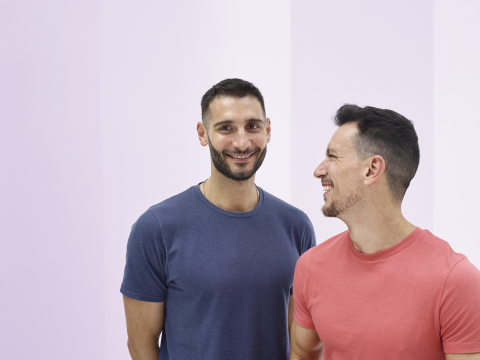
Bruno Cassettai is a doctor who specialises in advanced aesthetic medicine and lives in the Baix Guinardó neighbourhood with his partner, Sebastián Bergero. They have been together for fourteen years. Sebastián is a graphic designer specialising in UX and who, like Bruno, studied at the University of Buenos Aires. The couple married in Barcelona, the city which they have chosen to make their home. Bruno defends the right to receive medical treatment without prejudice and stigma-free access to mental health services with professionals who have received training in diversity, believing that emotional well-being is as essential as physical well-being. Barcelona has enabled them to build a life in which their identity and their vocations coexist in harmony.

Sophia Vargas
Graphic designer
Sophia Vargas was born in Colombia and has been living in Sant Gervasi for the past few years. She is a graphic designer, studying for a Master in Education and is a full-time activist. Sophia calls for a truly inclusive society that understands that there is not just one way of being, living or resisting. She understands intersectionality as a series of interconnected oppressions that are activated depending on the context. “It is not a fad, it is a tool for real justice.”