The Workgroup on Food Waste in the sphere of education sets out action to prevent it in the city
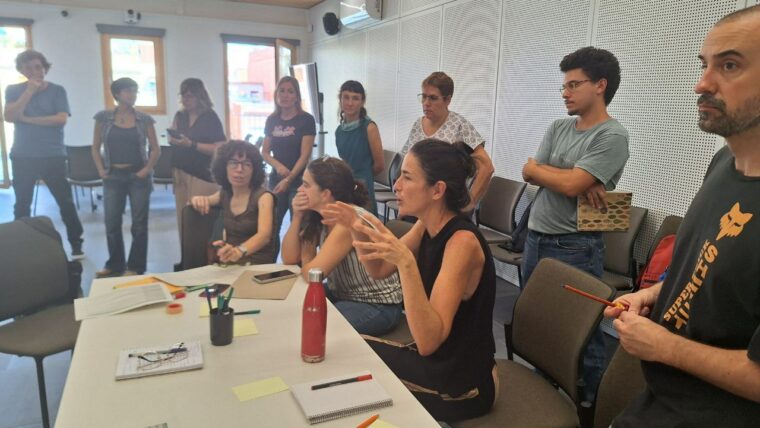
Following a working meeting on 16 September, the group set out areas of action such as communication, the impact on retailers and better coordination.
The Urban Food Policy Section at Barcelona City Council organises an internal workgroup on food waste, with the dual intention of explaining the programmes, projects initiatives and actions that the City Council is carrying out to prevent it and, at the same time, working on new areas of action which administrations and organisations can collaborate on.
Projects in Barcelona fighting food waste
Among the actions that stood out, the group mentioned the dissemination meetings (presentation of guides on combating food waste in different sectors such as schools, commerce, restaurants, markets etc., workshops and community actions in local areas etc.), the gathering of data by the Òmnibus Municipal, communication campaigns (also participation in campaigns by other administrations such as “Aprofitem els aliments”, by the Government of Catalonia) and specific lines applied in municipal subsidy schemes (“Impulsem el que fas”, general subsidies).
Key programmes and projects by Barcelona City Council to combat food waste include the “Alimenta’t amb seny” micronetworks and the programme “Menjadors més sans i sostenibles”.
In terms of events that stand out in this field of work, we should mention the Terra i Gust fair and the participation in he Gastronomic Fòrum, with a space devoted to sustainable restaurants.
It is also worth mentioning spaces of governance, such as the City Agreement and workgroups, plus participation in supramunicipal and international networks such as C-40.
Finally, Mercabarna’s Foodback resource was mentioned, which collects excess food from wholesalers.
Needs and suggestions to prevent food waste
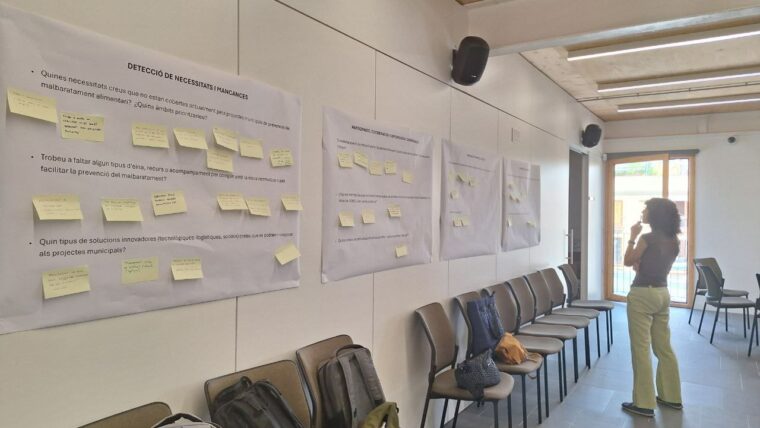
After the internal work by various professionals and organisations at the session, the conclusion was that further progress is needed in the following areas of action:
-
- More communication: more dissemination campaigns and, in general, more coordination and knowledge of action in different territories to explore possible synergies. More communication on planned action is needed in the workgroup.
- More resources:
- to enforce compliance with the regulations relating to food waste, adding more inspection bodies and more coordination with them.
- To look for a digital tool that unifies data from food recycling networks.
- Shared resources: with the generation of a repository for common data that facilitates analysis in different areas of food waste. Particular attention was given to the need to gather data from Mercats de Barcelona.
- New audiences:
- more intervention in the retail sector.
- The number of organisations forming part of these workgroups needs to be increased.
- More coordination:
- Between facilities in the territory and organisations (particularly community centres when they have programmes linked to food matters).
- Assessment of the impact of food recycling actions needs to be improved.
More information