

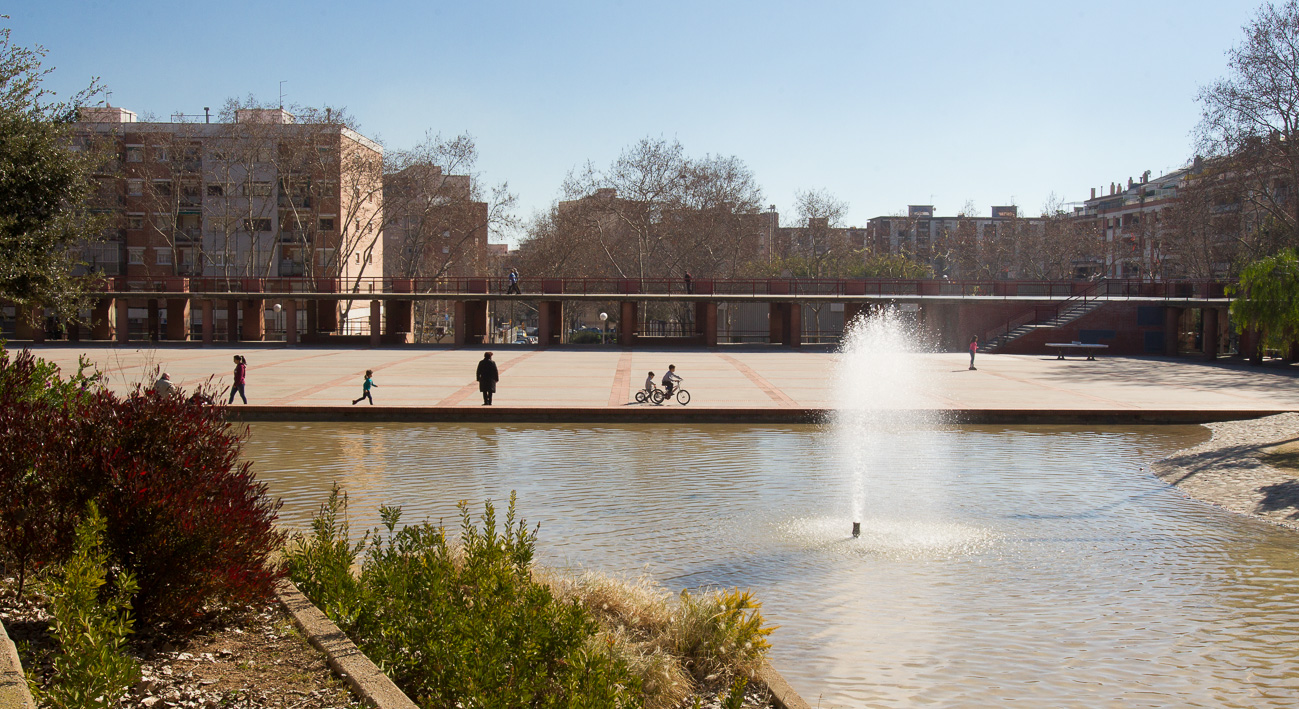
When you enter from the mountain side, Plaça de Sóller conceals its structure of terraces and the lake separating the greenery from the paved esplanade. You can get an idea of the whole by walking up any of the two ramps that start at either end and run round the perimeter of the square, rising up and creating a mirador-balcony over its facilities.
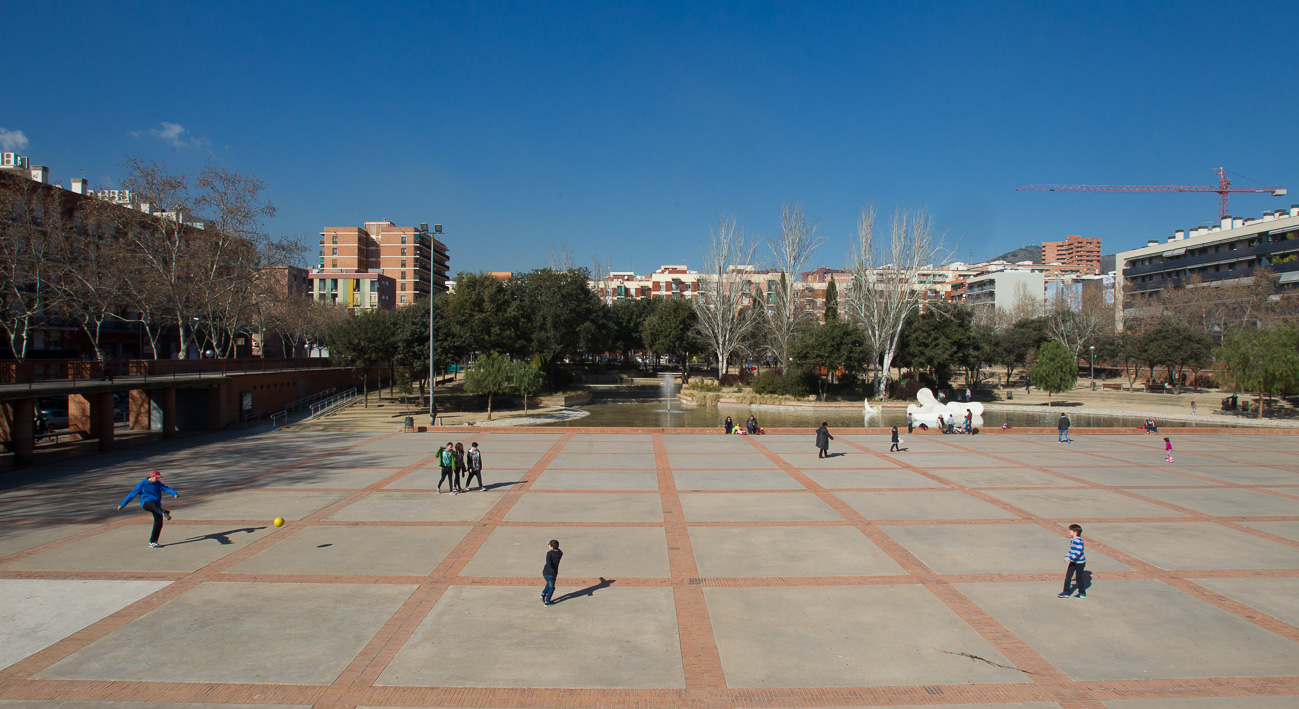
As you make your way up the first sections of one ramp, you will be accompanied by the swaying branches of a Chinese wisteria (Wisteria sinensis) next to a wall that gradually gains height. During springtime the pome flowers, which can grow up to 30 cm and have a strong fragrances, fall, hanging from the railings, towards the garden. From the opposite side of the square, you can see the paved part, the stage for neighbourhood events, activities, festivals, auditions and shows. The lake, waterfall and backdrop of trees act as a screen and dampen the sound of the busiest streets.

History
The square was officially opened for public enjoyment in 1983, when democracy had been fully restored. It represents a local residents’ victory, a demand that is now a living, active reality in the form of a landscaped, neighbourhood square. The municipal architects A. Arriola, J.L. Delgado, J.M. Julià and C. Ribas answered the local residents’ needs and turned 22,000 m2 of space acquired by the City Council into a large square, with 15,413 m2 allocated to green space and the rest to paths, a civic square, and various facilities and services located in the lower part to make the most of the space created by the existing terrain between C/ Escultor Ordoñez and C/ Estudiant.

Art and Architecture
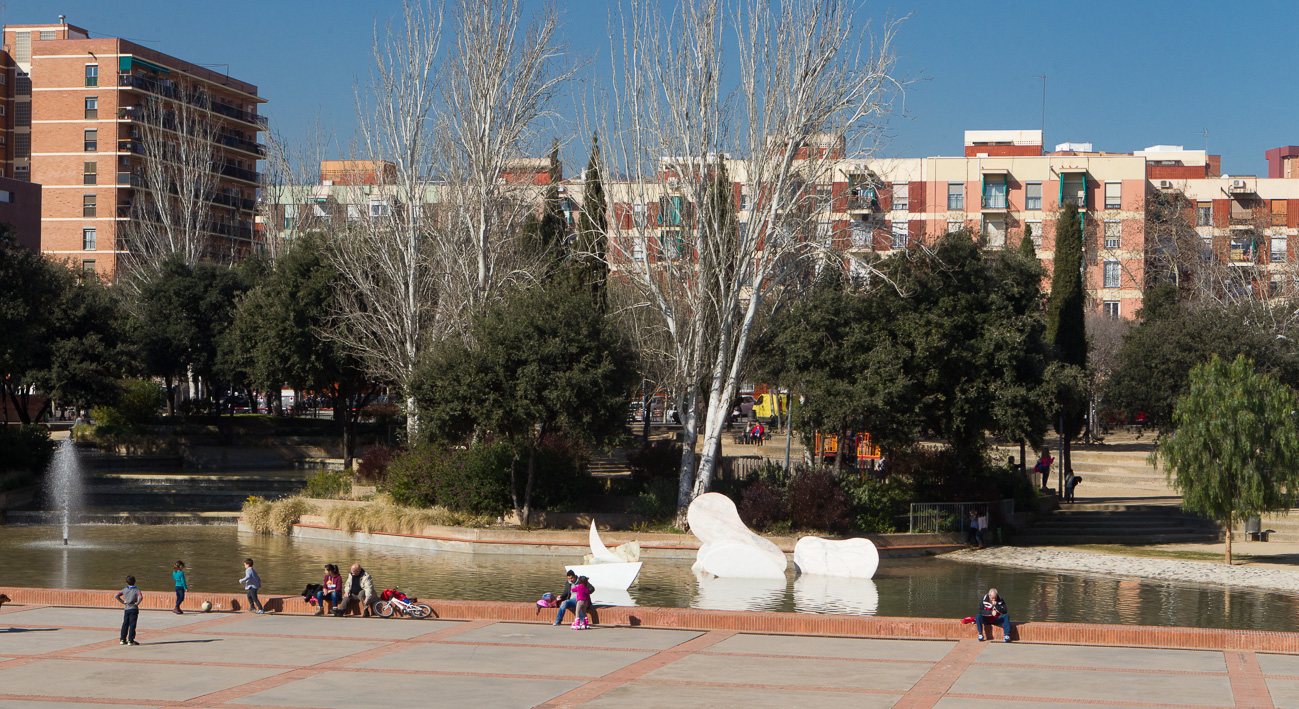
Plaça de Sóller enjoys the privilege of having one of the first displays of contemporary street art located in an outlying neighbourhood. Oriol Bohigas, the then councillor for urban planning, commissioned Xavier Corberó as part of a plan to bring monuments to the outskirts. The sculptor created a sculptural ensemble for the square (Barcelona’s biggest when it was built) consisting of 41 slender, rounded sheets (5 mm to 8 mm thick) of Portuguese pink marble, Almeria white marble and Iranian onyx. Fragile, luxurious materials that bring to mind a boat, some clouds, the sun and the moon. It is a recreation of the Balearic Islands and of the historical relations maintained with the neighbourhood, which explains why the sculptor called it Homenatge a la Mediterrània (Homage to the Mediterranean).
The sculpture’s flat, stony surfaces are extraordinarily fragile and so slim that light passes through them. That means the veins of the marble and the onyx are reflected on the surface of the water, incorporating it into the surroundings as a dynamic and moving feature of the sculpture.
-
- Titularity
- Public center
- Sections of this equipment
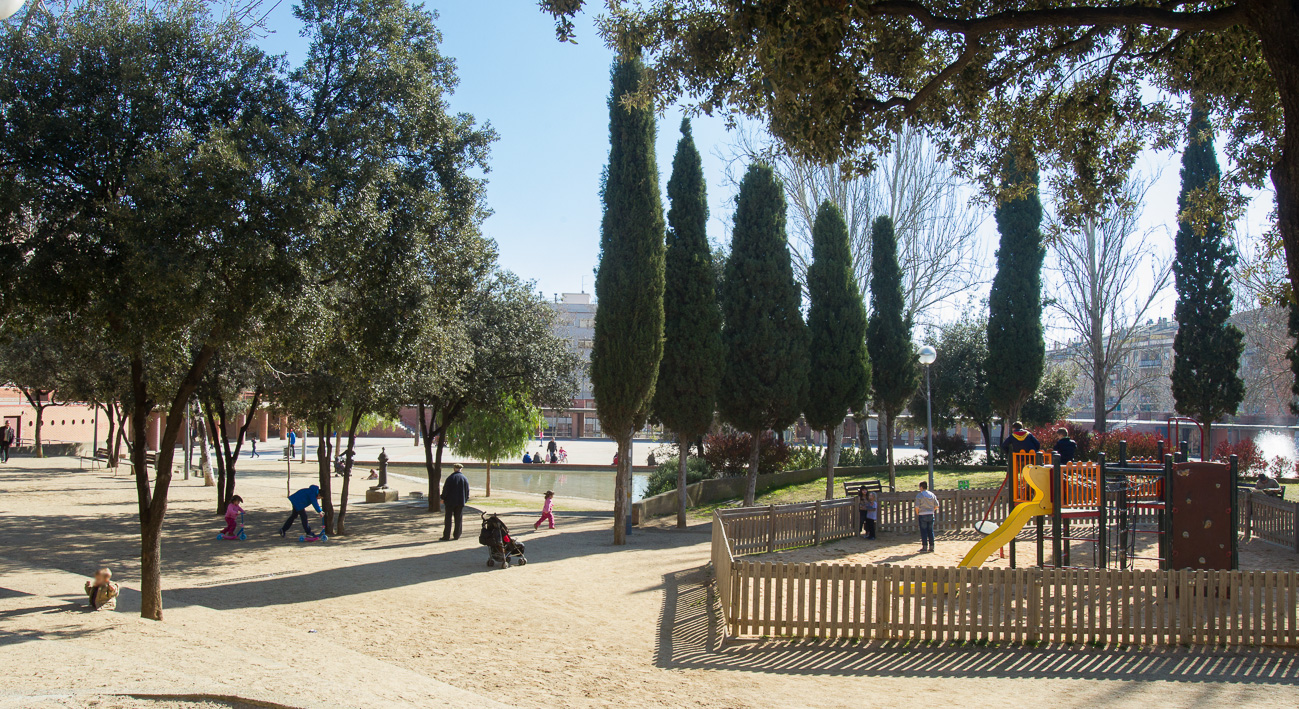
- Àrea de joc infantil
- Cistella de bàsquet
- Àrea de joc infantil
- Taules de ping-pong
Espai obert