


Alcora collection
Alcora collection
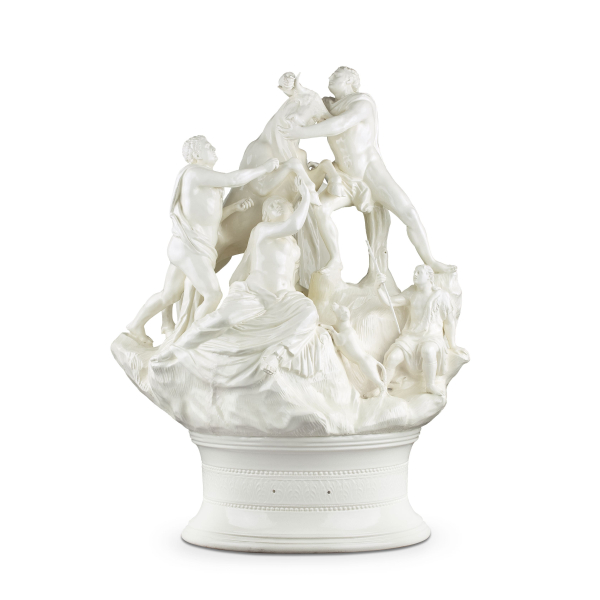
In 1727 the Count of Aranda founded the Royal Pisa Factory in the Valencian town of Alcora. A project that aspired to produce first-quality pieces, mirrored the great European ceramic manufactures and sought to compete with foreign productions, when the refinement of the life of the courts and the nobility had imposed itself, which facilitated the renewal of crockery and decorative elements.
The production of Alcora received the support of the Crown and has transcended as a brand of quality and an easily identifiable artistic style, with decorations that respond to cultured and academic models, with series such as the Berain style, Chinese (xinaries) or rockery, among others.
In the Museum's collection, Alcora's production is not very numerous: there are four 18th-century water fountains, a Calvary plaque from the first half of the 20th century - a copy of a head model in 1780, probably the output of one of the workshops that were established around the Royal Factory and that continued to work when it had already closed. Finally, the sculptural group of The Farnese Bull , 19th century copy from a mold from the Royal Factory, which corresponds to the group of decorative sculptures that came out of the furnaces of Alcora.
