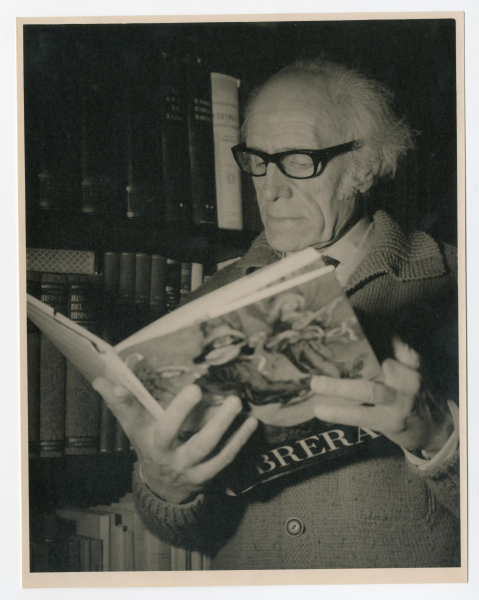

Frederic Marès
Frederic Marès
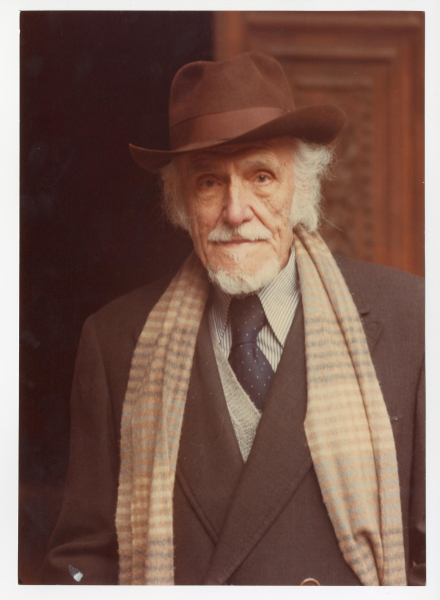
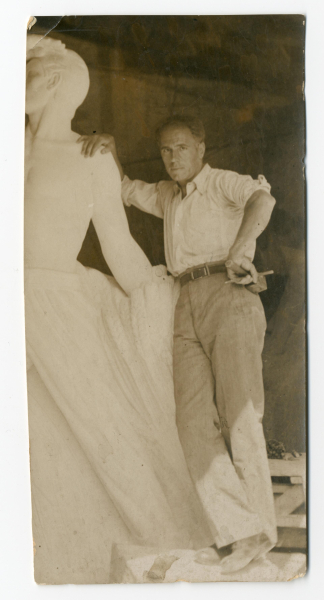
Frederic Marès i Deulovol (Portbou, 1893 - Barcelona, 1991) arrived with his family in Barcelona in 1903, when he was ten years old. He immediately attended classes at the School of Fine Arts, in Llotja, where he trained as a sculptor and where, later, he was a teacher until 1964.
Frederic Marès i Deulovol (Portbou, 1893 - Barcelona, 1991) arrived with his family in Barcelona in 1903, when he was ten years old. He immediately attended classes at the School of Fine Arts, in Llotja, where he trained as a sculptor and where, later, he was a teacher until 1964.
Marès began working in the workshop of the modernist sculptor Eusebi Arnau. From this period is his first monument in the city of Barcelona, in Plaça del Clot, dedicated to Canon Rodó (1919).
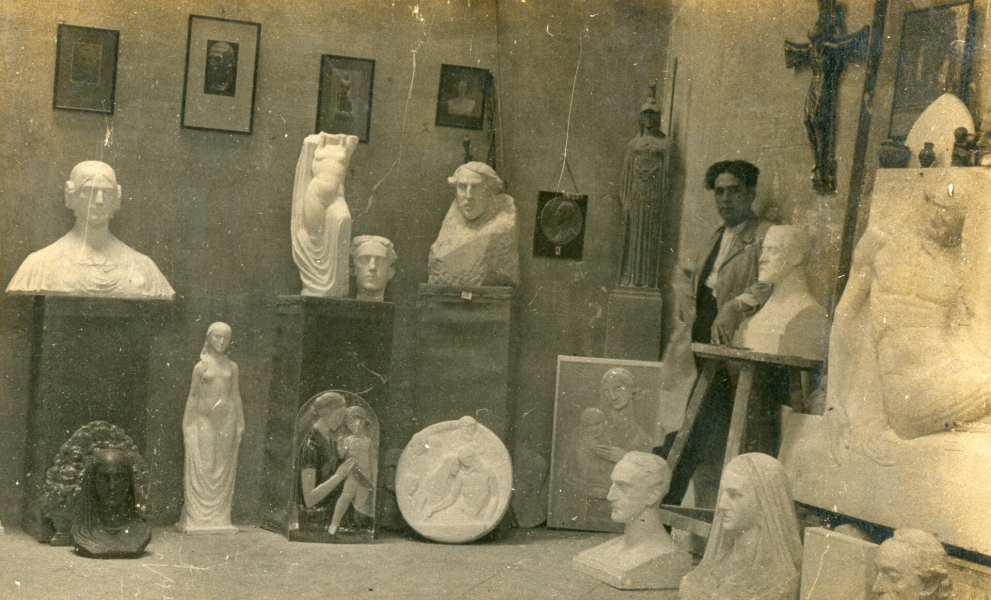
At this stage, when Marès was still unknown, his work focuses both on the production of funerary portraits and sculptures, and on the execution of a series of female nudes, pieces that allow his work to be classified within the most characteristic lines of Noucentisme.
However, Marès' fame as a sculptor is linked to his dedication to monumental sculpture, such as the Barcelona and Emporion sculptures, which adorn Plaça de Catalunya; the memorial dedicated to scenographer Francesc Soler i Rovirosa, in Gran Via, or the monument to Francesc Layret, in Plaça de Goya, all of them in Barcelona.
After the Civil War, Marès' extensive and numerous post-war production focused on three areas: the restoration of monuments, an area in which the recreation of the royal tombs in the church of the monastery of Poblet, begun in 1944, stands out; the official commemorative works, such as the recumbent statues of Jaume I and Jaume II in the cathedral of Mallorca, and the religious sculpture, in which the decoration and statuary of the church of Sant Esteve de Parets del Vallès stands out.
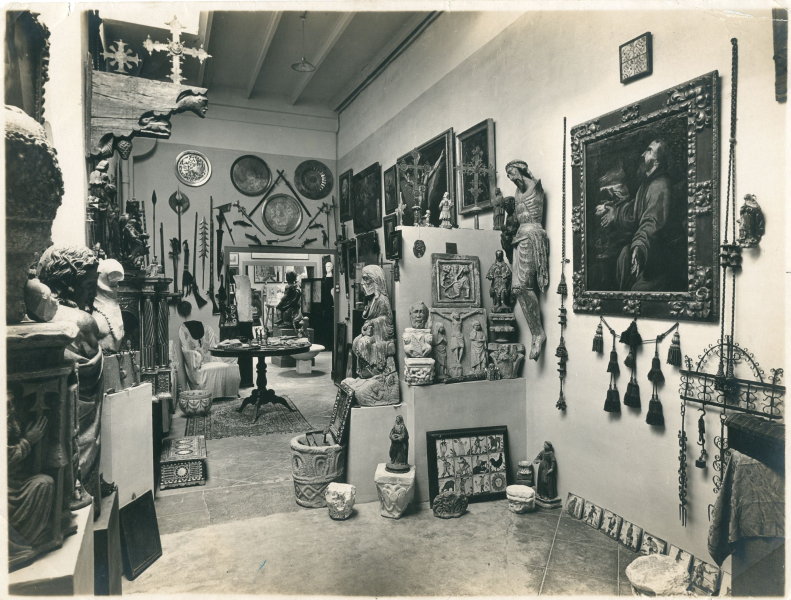
Marès, however, in addition to being a sculptor, felt a passion for collecting from a very young age. In Paris, as early as 1911, he discovered the world of antique dealers and auctions, and acquired his first collections. He gradually enriched them and collected them in his sculpture workshop and in his home, until in 1944 the Associació dels Amics dels Museus de Catalunya organized an exhibition with a selection of his collection at the Historical Archive of the City, and he made public his intention to donate it to the city.
The inauguration and the progressive growth of the Museum took off more and more, to the point that the collection came to occupy the first term of its activity. Personal dedication to sculpture was increasingly scarce and he left it, for the most part, in the hands of his workshop.
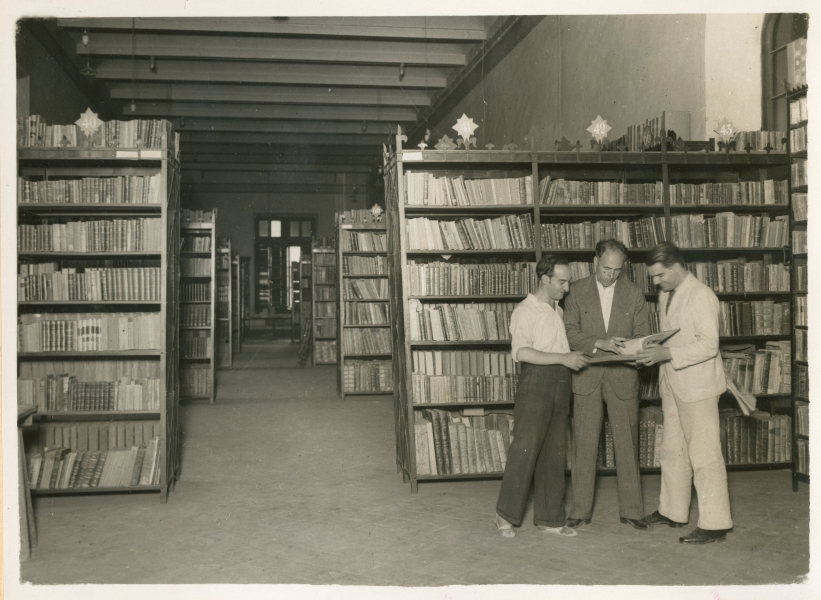
It should also be remembered that, at the same time, Marès carried out a remarkable teaching job, since he came to combine the direction of the School of Fine Arts and the School of Applied Arts and Artistic Crafts in Barcelona, and even the presidency of the Royal Catalan Academy of Fine Arts of Sant Jordi.