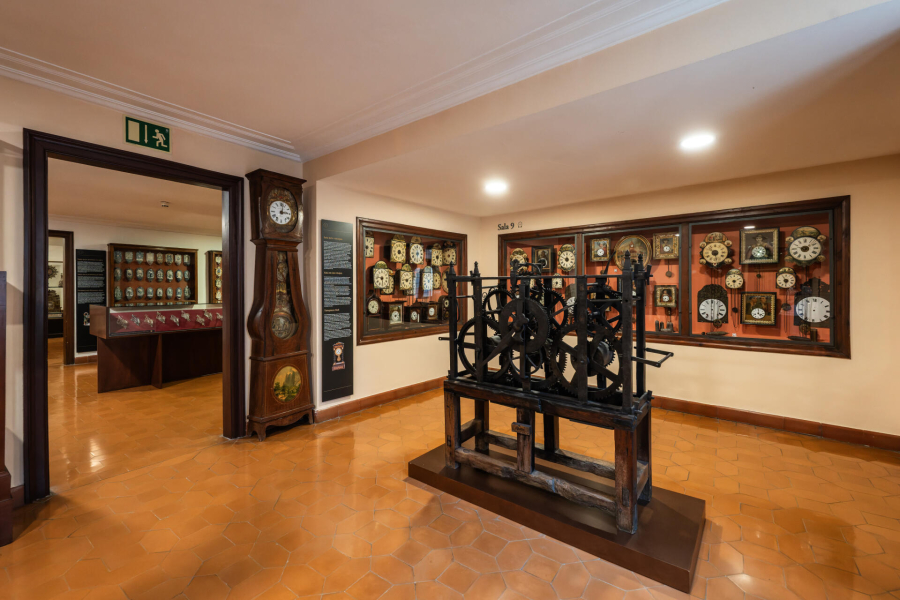

Room of the clocks
Room of the clocks

The domestic clock was mostly incorporated in wealthy European homes from the 18th century. Its presence inside homes meant that this functional hardware - which allowed us to follow the passage of time with our ears and eyes - was covered with a decorative box, which turned it into an element of use that in many cases matched the decoration of the rest of the room.
The Museum's collection consists of domestic wall and table clocks. Among the first, those known as ratera predominate, made of pine wood and decorated with German-made chromolithographs, specifically from the Black Forest. Also very popular were the French wall-mounted ones, with a high box, known as a comtoise , due to its origin in Franche-Comté, and with a profusely ornamented brass pendulum.
France is the origin of many of the tabletop clocks in this room, such as the set in the form of a temple with Solomonic columns, or like the characteristic clock bun , metallic applications and curved lines. Of particular note is the remarkable clock that presided over Barcelona's Cafè de les Set Portes, and the clock machinery in the bell tower of the old Hospital de la Santa Creu de Barcelona, located right in the middle of the room.